Even before starting your home-buying journey, you're probably already aware that the numbers aren’t just about the home’s purchase price and your down payment. There are dozens of smaller fees, expenses, credits, and adjustments in the real estate transaction that you need to account for.
How Is Cash to Close Different From Closing Costs?
A lot of buyers in Lakewood, Rocky River, and Cleveland walk into their first showings thinking the down payment is the only big check they'll write. Then the Closing Disclosure shows up and there's a different, bigger number sitting on page three: cash to close.
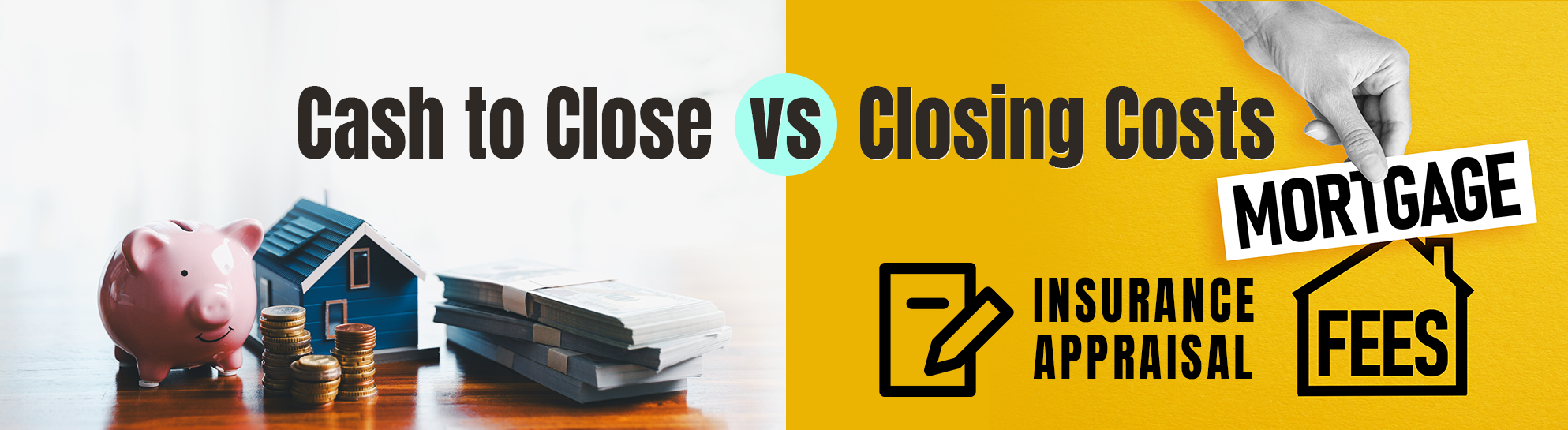
Closing costs are the fees you pay to your lender, the title company, and the county to actually transfer the home into your name — title insurance, the appraisal, recording fees, lender origination, escrow setup. In most Northeast Ohio transactions, those run roughly 2% to 5% of the purchase price. Cash to close is the whole picture. It includes those closing costs, plus your down payment, plus prepaid items the lender needs collected at closing, then subtracts whatever you've already paid (earnest money, appraisal fee out of pocket, seller credits). It's the wire amount.
What's Actually Inside Your Cash to Close Number?
Most cash-to-close figures in this area are built from four pieces. The first is the down payment — usually the biggest line. On a conventional loan that can be anywhere from 3% to 20% of the price; FHA buyers can come in as low as 3.5%; eligible VA and USDA borrowers can buy with no down payment at all.
The second is closing costs — title work, the appraisal, lender fees, recording, transfer taxes, attorney or title company fees, and HOA transfer fees in condo buildings around Lakewood's Gold Coast or downtown Cleveland.
The third is prepaid expenses — the items the lender collects up front so your escrow account starts funded. In Cuyahoga County and the surrounding areas, that's typically a chunk of property taxes, the first year of homeowners' insurance, and prepaid mortgage interest from the closing date through the end of the month.
The third is prepaid expenses — the items the lender collects up front so your escrow account starts funded. In Cuyahoga County and the surrounding areas, that's typically a chunk of property taxes, the first year of homeowners' insurance, and prepaid mortgage interest from the closing date through the end of the month.
When Will You See Your Final Number?
Federal rules require your lender to deliver a Closing Disclosure at least three business days before closing. That's not just a formality — it's your window to compare the final figures to the Loan Estimate you got at application, ask about any line item that moved, and verify wire instructions directly with your title company by phone. Wire fraud in real estate is real, and the safest move is to call a number you already have on file, not one in an email.
In a typical Northeast Ohio closing, the final cash-to-close figure can shift slightly between the Loan Estimate and the Closing Disclosure due to property tax prorations or HOA dues, so don't be surprised if the number isn't identical to the original quote.
How Do Loan Programs Change What You Bring to Closing?
Loan choice is the single biggest lever on cash to close in this market. A conventional loan with 20% down on a $300,000 Lakewood single-family means a $60,000 down payment plus closing costs and prepaids — call it $70,000 to $72,000 total. The same buyer using FHA at 3.5% down could be looking closer to $20,000 to $23,000 cash to close. VA-eligible buyers in Cuyahoga and Lake County often write much smaller checks because there's no down payment requirement and the seller can pay a meaningful share of costs.
How Northeast Ohio Buyers Can Plan Ahead
The buyers who close calmly are the ones who got their cash-to-close estimate before they even started showings. Ask your lender for a Loan Estimate at a few realistic price points — say, $250K, $325K, and $400K for the Cleveland and inner-ring suburbs market. That gives you a live number to budget against, plus a moving allowance and a small reserve for the inevitable surprise repair in the first 60 days.
If you're shopping in Lakewood, Rocky River, Bay Village, or any of the other Cuyahoga County suburbs, planning the closing date around your prepaid interest and tax proration can shave hundreds off your wire — small choices, real dollars.
Want a clear estimate of what cash to close looks like in the price range you're targeting? Send us the neighborhoods you're considering and we'll connect you with a local lender who can run the numbers without pulling credit. You can also browse current homes in Bay Village to see how price points line up with your budget.
FAQs
Q: Why is your cash to close almost always bigger than your down payment?
A: Cash to close adds prepaid taxes and insurance, lender and title fees, and escrow deposits to your down payment, then subtracts earnest money and any credits. Even on a low-down-payment loan, those add-ons can equal several thousand dollars in Northeast Ohio. That's why the number on your Closing Disclosure surprises so many first-time buyers.
Q: How early should you ask your lender for a cash-to-close estimate?
A: Get a Loan Estimate before your first weekend of showings, not after you have an accepted offer. It lets you set a realistic price range, tells you whether seller concessions are worth negotiating, and removes the guesswork from your bank transfers later. If you're focused on the west side, you can also explore homes in Rocky River to see how price points line up with your number.
Q: What's the difference between earnest money and cash to close?
A: Earnest money is the deposit you give when your offer is accepted, usually held by the title company and credited toward your purchase. Cash to close is the remaining balance you wire on closing day, after that earnest money is subtracted. Both go toward the same transaction, just at different stages.
Q: How can you reduce your cash to close before closing day?
A: Negotiate seller concessions in your offer, compare lender fees on your Loan Estimate, choose a closing date late in the month to lower prepaid interest, and ask about lender credits in exchange for a slightly higher rate. Loan programs like FHA, VA, and USDA can also drop your down payment requirement significantly. Buyers comparing options across price points often look at homes in Lakewood for the mix of inventory and walkability.
Q: Why should you call your title company directly to confirm wire instructions?
A: Wire fraud is one of the most common — and costly — issues in real estate, and scammers often spoof email threads in the final days before closing. Always call a phone number you already have on file (not one in an email) to verbally verify the wire instructions before sending funds.
By Scott Carpenter, Founder | The Carpenter Group | Keller Williams Greater Metropolitan
Scott Carpenter | Lakewood REALTOR® | Keller Williams Greater Metropolitan
13000 Athens Ave. Suite 3330
Lakewood, OH 44107
(216) 616-7898 | scott@thecarpentergrouphomes.com | www.thecarpentergrouphomes.com