
It's Time to Move
As I sat down to write this month's newsletter, Northeast Ohio had just weathered a tremendous heat wave, and now we're cooling down to temperatures in the low to mid seventies. Does that sound like the real estate market to you? What does that mean for buyers and sellers? In this month's issue, I've got the answers, and what buyers and sellers should be doing while others slow down.
Inside, you'll find our feature article on why this window matters, market trends for Northeast Ohio, my favorite events happening around town this month, insider tips from our preferred lender, this month's home buying and selling tips, and a spotlight on featured vendor Royal Heating and Cooling. And don't miss "And Finally...", where I explain why Murphy's Law might be the best reason to move no

Is It Time to Make Your Move?
By Scott Carpenter, The Carpenter Group
The Federal Reserve held its benchmark rate steady at 3.50 to 3.75 percent through its June meeting, but the tone out of Washington has shifted. Under new Fed Chair Kevin Warsh, policymakers have moved from talk of rate cuts to open discussion of a possible hike at the July 28 to 29 meeting, with inflation projections revised up to 3.6 percent for the year. The federal funds rate is the rate banks charge each other overnight. It does not set mortgage rates directly, but it shapes the bond market that does.
That shift has already reached Northeast Ohio kitchen tables. Freddie Mac's weekly survey put the 30-year fixed mortgage rate at 6.55 percent as of July 16, the highest level since May, and most forecasters, including Fannie Mae and the Mortgage Bankers Association, expect rates to hold in the mid-6 percent range through the rest of the year. Nobody is waiting on a return to 3 percent money. The rate you see today is likely close to the rate you will see this fall.
Here at home, the picture is more encouraging than the national headlines suggest. Cleveland's housing inventory has been climbing, up double digits year over year in recent months, giving buyers more to choose from than they had a year ago. Prices are still rising, but at a steadier, more sustainable pace, generally in the mid-single digits, rather than the sharp jumps of a few years back. That combination, more homes to choose from and rates that have stopped their free fall, is exactly what makes a market movable again.
Move can mean a lot of things this fall.
For the young family who chose to spend the summer enjoying the outdoors rather than competing with other buyers with more cash and fewer contingencies, fall is historically the season when the market loosens. Listings that lingered through the summer often get a fresh look, sellers get more realistic, and there is less competition at the open house.
For the empty nester or retiree, moving may not be about a deadline. It is about recognizing that today's equity, built up over years in a home that has appreciated well beyond expectations, may not sit this high forever if rates keep drifting up and buyer budgets tighten. Downsizing while the market still rewards sellers is its own kind of good timing.
For the growing family ready to move up, waiting for a materially lower rate has not paid off this year. The families who moved in the spring are already settled. Move can simply mean deciding not to wait on a number that may not change much.
And move does not have to mean a moving truck at all. It can mean making a plan, quietly getting a home ready to list in the new year, tackling the roof, the kitchen refresh, or the landscaping now so it shows well when the time comes. It can mean a property tax assessment review to make sure you are not overpaying on a value that has shifted. It can simply mean getting pre-underwritten so you know exactly where you stand before you ever put up a sign.
The one thing that stops people cold: needing to sell to buy.
This is the most common reason a ready seller stays put. In a market where good listings still move quickly, a contingency to sell your current home before buying the next one is often too slow to compete, and sellers of well-priced homes rarely need to accept one. That leaves a real gap between wanting to move and being able to.
There are paths around it. A bridge loan lets you borrow against the equity in your current home to fund a purchase before it sells, so you are not stuck choosing between selling first and losing your next house, or buying first and carrying two mortgages with no plan. A home equity line of credit, or HELOC, works similarly, giving you access to your home's equity as a flexible line of credit rather than a lump sum.

Neither is the right tool for everyone, but for the right household, either can turn a stuck situation into a straightforward move.
Our lending partners walk through these options one on one, comparing a bridge loan, a HELOC, and a standard sale-contingent purchase side by side so the choice is based on your numbers, not guesswork. If not knowing how to get from here to there has been the thing holding you back, that is a conversation worth having now, before fall listings pick up.
Whether your move is across town, down the street, or just the first step of a plan for next spring, the conditions to start are here. As Karl Benjamin, Executive Vice President of Third Party Origination at Cardinal Financial, put it, buyers today are no longer waiting for perfect timing or the lowest possible rate. In his words, "personal readiness has more impact on long-term outcomes than trying to predict market shifts."
Waiting has a cost on both sides of the transaction. Research on 2026 listings backs this up: homes that sold within the first two weeks closed at higher prices than the monthly average, while listings left to sit for months closed well below it. An overpriced listing left to linger does not simply wait quietly. It loses momentum, loses buyer interest, and ultimately sells for less than it would have if it had been priced right from the start.
Here is what I have seen firsthand with my own buyers and sellers over the last several months. For buyers looking for a deal, my advice is simple: look at homes that have been on the market for more than three weeks and have not yet had a price reduction. That is often where the room to negotiate lives. For sellers, my advice is just as simple: look at the comparable homes that have already sold and what they closed for, then look at what is currently on the market against yours, and pay close attention to the ones that have recently reduced their price. Let those reductions be your guide. The goal is not just to sell for as much as possible. It is to sell for as much as possible as quickly as possible, by pricing your home to attract every buyer who has already said no to the competition.
If you are interested in making a move, or just want to learn more, let's talk.

Fast-Moving Market Shifts
Lakewood
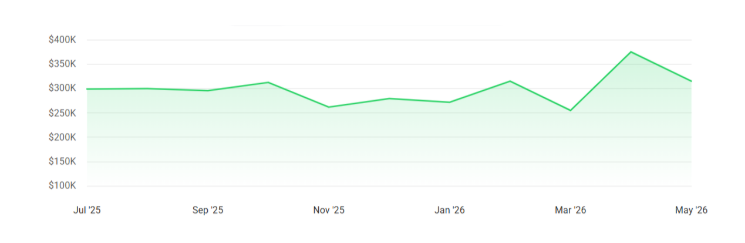
Lakewood has 1.79 months of inventory, down 3% month over month and 14% year over year. The median sold price is $350,000, up 2% month over month, with homes selling for 104.56% of list price. Median days on market for sold listings are 4 days, down 20% month over month.
The Impact: Inventory continues to tighten while homes are selling in just a few days. Buyers need to be prepared to act quickly, and sellers have an opportunity to benefit from strong demand and competitive pricing.
Action Plan: Coordinate your buying and selling timelines to minimize disruptions. Have your financing and home preparations in place before making a move. Review current market activity with a real estate professional to create a strategy that fits today's fast-paced conditions.
Shaker Heights
Shaker Heights has 2.47 months of inventory, up 13% month over month and down 10% year over year. The median active list price is $389,950, while the median new listing price is $450,000. Pending listings have a median of 11 days on market, while sold listings average 9 days.
The Impact: Inventory remains limited despite a modest monthly increase, and homes continue to move at a healthy pace. Buyers and sellers who stay informed and ready to act will be better positioned as market conditions continue to evolve.
Action Plan: Keep a close eye on new listings and inventory trends. Review current pricing to set realistic expectations, and be prepared to make timely decisions when the right opportunity appears.
Cleveland Heights
Cleveland Heights has 1.31 months of inventory, down 10% month over month and 61% year over year. The median sold price is $310,000, up 15% month over month. Sold listings have a median of 13 days on market, down 7% month over month.
The Impact: Inventory remains exceptionally tight while home prices continue to climb. Faster sales and limited availability make preparation and timing especially important for both buyers and sellers.
Action Plan: Monitor inventory trends to identify opportunities as they arise. Make sure your finances and home preparations are ready before entering the market, and develop a strategy that reflects today's pricing and pace.
Cuyahoga County
Cuyahoga County has 1.85 months of inventory, down 2% month over month and 18% year over year. The median sold price is $260,000, up 8% month over month. Median days on market for sold listings are 8 days.
The Impact: Limited inventory and rising home prices continue to create a competitive market. Buyers and sellers who plan ahead and stay flexible will be better equipped to navigate today's conditions.
Action Plan: Monitor inventory levels and recent sales activity to guide your timing. Take advantage of new listings as they hit the market, and be ready to move quickly when opportunities arise.
Lorain County
Lorain County has 1.59 months of inventory, down 2% month over month and 24% year over year. The median sold price is $296,000, up 3% month over month, while the median active list price is $305,000. Pending listings have a median of 11 days on market, up 10% month over month.
The Impact: Inventory continues to shrink while prices trend upward, creating favorable conditions for well-prepared sellers and motivated buyers. Careful planning remains key to making a smooth transition.
Action Plan: Plan your sale and purchase timelines in advance to avoid unnecessary delays. Price your home strategically based on current market activity, and work with a trusted real estate professional to navigate today's evolving market with confidence.

Buying or selling a home moves fast, and the right approach makes all the difference. These quick tips will help you stay prepared, make smarter decisions, and get better results. Keep them in mind as you navigate the process.
“TIPS FOR HOME SELLERS”
“TIPS FOR HOME BUYERS”

Ready for More Space?
Define Your Must-Haves
Know Your Budget
Explore More Neighborhoods
Think Long Term
Get Pre-Approved First

Ready for What's Next?
Know Your Home's Value
Declutter Before Listing
Plan Your Next Move
Price It Strategically
Maximize First Impressions

A Guide for Homeowners Weighing the Decision

Not because anything is wrong, but because something feels off. The house doesn't fit like it used to. The neighborhood changed. The kids left. The commute got longer. Or the equity just sits there while life keeps moving.
Some of them have been asking the question for a year. Some for five. And almost all of them are waiting for the market to give them permission, a rate drop, a price shift, a headline that finally makes the move feel safe.
Here's the truth most people miss:
The "right time to move" is almost never a moment in the market. It's a moment in your life.
After more than two decades in this business, I've watched people wait for perfect timing, only to realize later that perfect never came and the cost of waiting was bigger than the cost of moving. Let me break it down.
Most homeowners frame the decision around the payment. They compare their current mortgage to a new one, see a bigger number, and shut the conversation down before it starts. But staying has a cost too, one that rarely shows up on paper.
Examples:
A house that no longer fits your life is a monthly tax on your quality of life.
Deferred maintenance on an aging home quietly eats the "savings" of staying put.
The commute, the layout, the neighborhood — small friction adds up over years.
Rooms you don't use still cost you in taxes, utilities, and upkeep.
Missed opportunities — a better school district, a shorter drive, a home closer to family — carry a real price, even if it's invisible.
The right comparison isn't your current payment vs. a new one. It's the full cost of staying vs. the full cost of moving. Once you run that math, the answer often flips. Staying isn't free. It just feels that way.
Your Equity Is Bigger Than You Think
Most homeowners haven't looked at their equity in years. They're sitting on more than they realize.
Five years of appreciation, principal paydown, and a Cleveland market that has outperformed the country has quietly created real wealth. Cleveland is currently among the top 10 appreciating markets in the U.S. — a fact most local homeowners still don't know.
That equity can:
Cover the down payment on the next home with room to spare
Reduce the loan amount enough to offset today's rates
Fund a fresh start without draining savings
Wipe out high-interest debt in the process of moving
Fund the renovation or upgrades your next home actually needs
The homeowners who move now are using the wealth they already built to fund the next chapter — without touching their retirement, their savings, or their
lifestyle.
Equity isn't just a number on paper. It's leverage waiting to be used.
The Rate Isn't the Whole Story
Yes, rates are higher than they were in 2021. But that's not the full picture.
Sellers are offering concessions. Builders are paying down rates into the 4s. Equity from your current home reduces what you need to finance in the first place. Loan structures — permanent buydowns, temporary buydowns, ARMs, and blended strategies — can shape the payment far more than the headline rate ever will.
The buyers who understand this aren't paying the rate you see on the news. They're paying something significantly lower once the structure is built around them.
The payment on your next home is rarely what a rate calculator predicts. It's usually better — when you know how to structure it. Rate is one variable. Structure is the strategy.
The "Waiting for Rates" Trap
Everyone is waiting for rates to drop. But here's what usually happens when they do:
Prices jump. Buyer competition returns. Multiple offers come back. Inspection contingencies get waived. Appraisal gaps get filled by desperate buyers. The savings on the lower rate get swallowed by the higher price and lost negotiation leverage.
I've watched this cycle play out three times in my career. It never plays out any other way. You can refinance a rate. You can't renegotiate a price after you've paid it.
The buyers who move now often win twice — a better deal today, and a lower payment tomorrow. Marry the house. Date the rate.
Life Fit Matters More Than Market Fit
The best move isn't the one that times the market perfectly. It's the one that fits your life.
Examples:
A growing family needs space, not the "perfect" mortgage rate.
Empty-nesters can trade square footage for freedom — lower payment, less maintenance, more cash flow.
A career change, a health need, or a shift in priorities is a bigger reason to move than any headline.
Aging parents, grown kids returning home, or a spouse working remotely can change what "home" needs to be almost overnight.
Sometimes the reason to move is simpler than all of that — you're just done with where you are.
None of those reasons show up in a market report. All of them matter more. The market will always be doing something. Your life won't wait.
The Downsize Play Is Underrated
If your current home is bigger than your life needs, downsizing isn't a step backward — it's a step forward.
Pull equity. Cut the payment. Cut the tax bill. Cut the maintenance. Reinvest the difference into what matters now — travel, family, retirement, a second property, or simply more margin in your life.
Some of the most confident moves I've closed in the last two years have been downsizes. Homeowners in their 50s and 60s realizing that the big house was serving a version of their life that ended years ago. They didn't downsize because they had to. They downsized because they finally saw what staying was costing them. Live smaller. Live richer.
The Bottom Line
If you're asking whether it's time to move, that's usually the first sign that it might be.
The right move isn't about catching the market at the perfect moment. It's about lining up your home with the life you're actually living — not the one you had when you bought it.
The homeowners who win aren't the ones who timed it. They're the ones who ran the numbers, made the call, and moved before the moment passed.
If you're weighing it, the best advice I can give is simple:
Run the numbers before you rule it out.
The answer is almost never what you expect.
Matt Panigutti is a Loan Originator formerly with APM
and now with Revolution Mortgage.
You may contact him directly by phone 📞 (216) 366-8202 or by
email 📧mpanigutti@revolutionmortgage.com.

Cash+ Home Sale
A cash offer that never leaves money on the table.
Finally... a cash offer that gives the upside of the market.
Our cash offer gives you your cash today, with the upside of the market tomorrow. Get your Cash Offer+ NOW!

Lakewood Hardware

The nuts and bolts for all your projects
Lakewood Hardware was founded with the idea of providing much-needed services and products to residents of Lakewood and the surrounding communities.
The business is known for its staff, who are well informed, stay up to date with the latest industry news, and welcome the challenges that homes in the area present. Whether customers need materials or services, the team is ready to assist. If a request goes beyond what the store can provide, they are able to recommend local contractors or vendors to help ensure the right solution is found, regardless of the size of the job.
Lakewood Hardware is also a proud member of the North American Retail Hardware Association.

And Finally... What Could Go Wrong

Murphy's Law says if anything can go wrong, it will. Most people hear that as a warning to wait. I've come to see it as the opposite.
Here's the thing about Murphy's Law: it's not a prediction about the future. It's an observation about the present. It's a reminder that something can always go wrong, at any moment, no matter how long you wait for conditions to feel safe. Waiting doesn't remove the risk. It just delays the decision while the risk stays exactly where it was.
I think about this every time I'm out sailing. The wind will shift. The forecast will be wrong sometimes. You don't wait for perfect conditions. You read what's in front of you, trim the sail, and go.
Real estate works the same way. Rates might drop. They might not. Your dream house might sit on the market a while longer, or it might not. Nobody can promise you a better tomorrow. But we can look clearly at today, and decide from there.
Sometimes the smartest move is simply moving.